
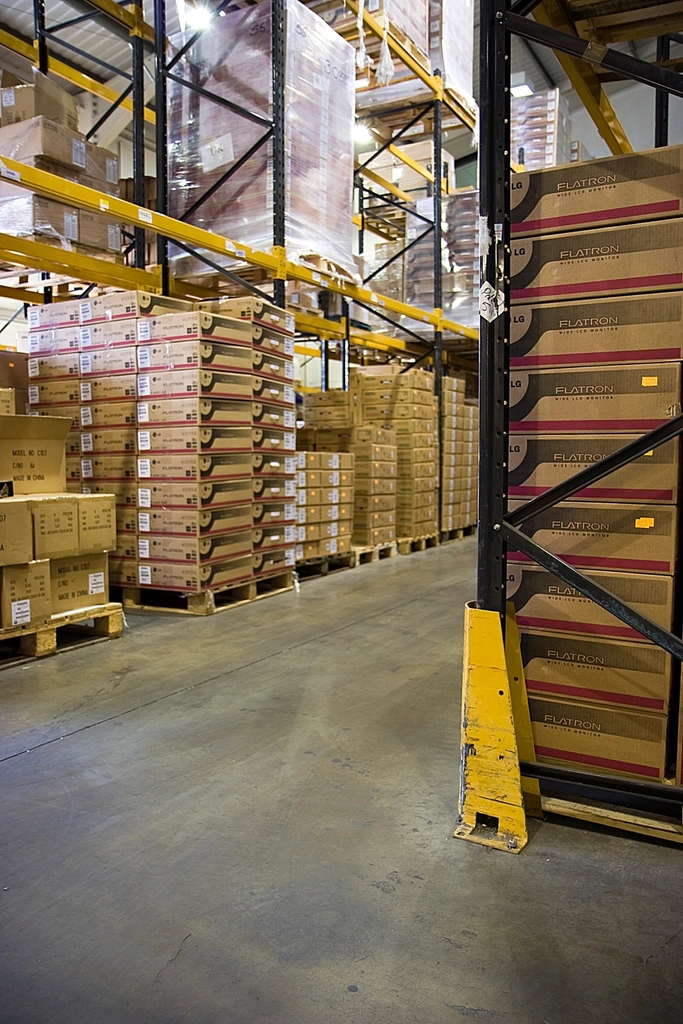
Your warehouse is packed to the roller doors. Racking is full, the yard has overflow, and your team just finished receiving a big shipment. Then a key supplier sends through the next purchase order confirmation and you realise you can’t pay for it. Not because the business is failing. Because every dollar you have is sitting on pallets, wrapped in plastic, going nowhere fast enough. This is one of the most common cash crises in warehousing, and it almost never shows up as a problem on your P&L.
The Inventory Trap That Starves Your Bank Account
Here is what is actually happening. You bought well. Maybe you secured a volume discount or locked in pricing before a supplier increase. Smart move on paper. But now you have four months of stock on hand for lines that move every six weeks, and your cash conversion cycle has blown out to ninety days or more. Your P&L still looks healthy because that inventory is sitting there as an asset, not an expense. It only hits cost of goods sold when it ships. So your profit and loss statement says you are making money, while your bank account says you cannot make payroll and cover the next inbound container at the same time. This is not a profitability problem. It is a timing and capital allocation problem, and it is the exact kind of thing that CFO services Perth operators rarely get help with until the pain is acute. The mechanics are straightforward once you see them. Every dollar tied up in slow-moving stock is a dollar you cannot use to buy fast-moving stock, cover your lease, or fund the labour to pick and pack what is actually selling. You end up borrowing against an overdraft facility to fund operations that should be self-funding, and the interest cost quietly erodes the margin you thought you locked in with that bulk purchase.
Measuring What Actually Matters in a Warehouse
Most warehousing operators know their total stock value. Fewer know their inventory turn by SKU category, their average days on hand by product line, or their dead stock ratio. These are the numbers that tell you whether your buying decisions are helping or hurting cash flow. Take a realistic example. You run a distribution warehouse in Kewdale. You carry eight hundred SKUs across three product categories. Category A turns every thirty days and makes up forty per cent of your revenue. Category C turns every one hundred and twenty days but makes up only ten per cent. If you are allocating purchasing budget evenly across all three, you are systematically starving Category A of reorder capital while over-investing in Category C. That is not a gut-feel observation. That is a calculation you can run this week from your existing inventory data. A warehousing CFO Perth engagement starts here, with the data you already have but are not slicing in the right way. The goal is a simple weekly dashboard that shows stock turn, days on hand, and gross margin contribution by category, so purchasing decisions get made with a clear view of what each dollar of inventory is actually doing for the business. Once you have that visibility, the buying conversation changes from volume and price to return on capital deployed.
Renegotiating the Buying Cycle Without Losing the Deal
Owners resist changing their buying patterns because they are afraid of losing volume pricing or upsetting supplier relationships. That is a fair concern, but it is usually overstated. Suppliers want consistent, reliable buyers. Switching from one large quarterly order to two smaller orders with tighter payment terms does not make you a worse customer. It makes you a more predictable one. And it means your cash is only tied up for half the duration. Let us say you are spending two hundred and forty thousand dollars per quarter on a key product line, payable on thirty-day terms from invoice date. That is two hundred and forty thousand dollars out of your account in one hit, recovering over sixty to ninety days as the stock sells through. If you restructure that into two orders of one hundred and thirty thousand each, spaced six weeks apart, you cut your peak cash exposure significantly and you start recovering revenue from the first order before the second payment is due. You might pay slightly more per unit. Run the numbers. If the per-unit increase is two per cent but you are saving eight per cent in overdraft interest and freeing up cash for faster-turning lines, you are ahead. This is the kind of trade-off analysis that separates reactive buying from strategic purchasing, and it is exactly where CFO services Perth warehousing operators need most becomes genuinely practical.
Building a Cash Cycle That Matches Your Warehouse Operations
The deeper fix is aligning your entire cash cycle to how your warehouse actually operates, not how your accounting software defaults. That means mapping the real timeline from purchase order to supplier payment to goods received to customer order to invoice to collection. In most warehousing businesses, there are two or three points in that chain where a small change creates a disproportionate improvement in cash position. Maybe it is tightening your invoicing from weekly to daily dispatch billing. Maybe it is negotiating supplier terms from thirty days to forty-five. Maybe it is implementing a minimum order threshold for customers so you are not picking, packing, and shipping fifty-dollar orders that cost you sixty dollars to fulfil. At 360 Fox, this is the work we do with warehousing owners across Perth. Not annual accounts. Not compliance box-ticking. A structured, ongoing engagement as your warehousing CFO Perth partner, where we build the cash flow model, set the purchasing parameters, and review the numbers with you fortnightly so every buying decision has a clear financial framework behind it. The warehouse is your engine. The cash cycle is the fuel system. If one is out of sync with the other, the whole operation runs rough no matter how full the racking looks.
A full warehouse is not a healthy warehouse if your bank account is empty. The stock has to move, the timing has to work, and every purchase order needs a cash plan behind it. If your inventory keeps growing but your ability to fund the next buy keeps shrinking, that gap will not close on its own. Talk to 360 Fox.
Want eyes on your numbers before the next big decision? 360 Fox is a boutique CFO practice for owner-led businesses in logistics, importing, warehousing, distribution, manufacturing and trading. Book a chat.